Sdiybt Meaning: Real Meaning, Examples & How to Reply 2026
Over 60% of online interactions now rely on abbreviations like “Sdiybt”. As communication shifts into the digital realm, understanding phrases like this one becomes essential for staying connected.
This article will uncover the real Sdiybt Meaning, showcase practical examples, and guide you on how to respond when you encounter it. Get ready to enhance your digital communication game and bridge the gap between generations!
What Does SDIYBT Meaning in Text?
SDIYBT stands for “Still Don’t Know You But Though.” It’s a casual abbreviation commonly used in online conversations, especially when people are getting to know each other. This phrase indicates a level of acknowledgment that, while the individuals may have been chatting for a while, there’s still a gap in familiarity. It’s a light-hearted way to express that the relationship is still in its early stages.
You might see it used in various contexts like gaming chats or social media interactions. For example, if someone notes how long they’ve been chatting, the response “SDIYBT” humorously highlights that while the conversation is ongoing, there’s still much to learn about each other.
Overall, it serves as a friendly reminder that building a connection takes time, and it’s perfectly okay to be in that initial phase of getting to know someone.
Background and History of SDIYBT
The background and history of SDIYBT reveal a fascinating evolution in online communication shaped by the dynamics of meme culture. Initially sprouting from the gaming and creative communities, this playful twist on the DIY ethos captures a spirit of self-sufficiency paired with a tongue-in-cheek attitude.
As users sought to convey complex ideas in a concise manner, SDIYBT emerged as a humorous way to suggest that, sometimes, doing it yourself might not be as straightforward as it seems.
Evolution of SDIYBT
- DIY became popular online.
- Meme creators began adding humorous variations.
- SDIYBT started appearing in forums and comment sections.
- TikTok and Reddit helped spread the term.
- It became part of modern texting vocabulary.
Where Is SDIYBT Commonly Used?
SDIYBT, which stands for “So Do I, You Better Talk,” is commonly used in informal online conversations, particularly on social media platforms, messaging apps, and forums. It often appears in chats among friends or in casual exchanges where the tone is relaxed and playful. The acronym serves as a quick way to emphasize shared feelings or experiences, making it an effective tool for fostering connection in less formal settings.
- Text Messages – Casual chats with new friends.
- Snapchat – Quick conversations and streak messages.
- TikTok – Comments and direct messages.
- Instagram – DMs and story replies.
- Gaming Chats – Talking with new teammates.
- Discord – Community and friend conversations.
- Online Forums – Friendly discussions with strangers.
Read Also: 250+ Vietnamese Pickup Lines
Examples of SDIYBT in Conversation
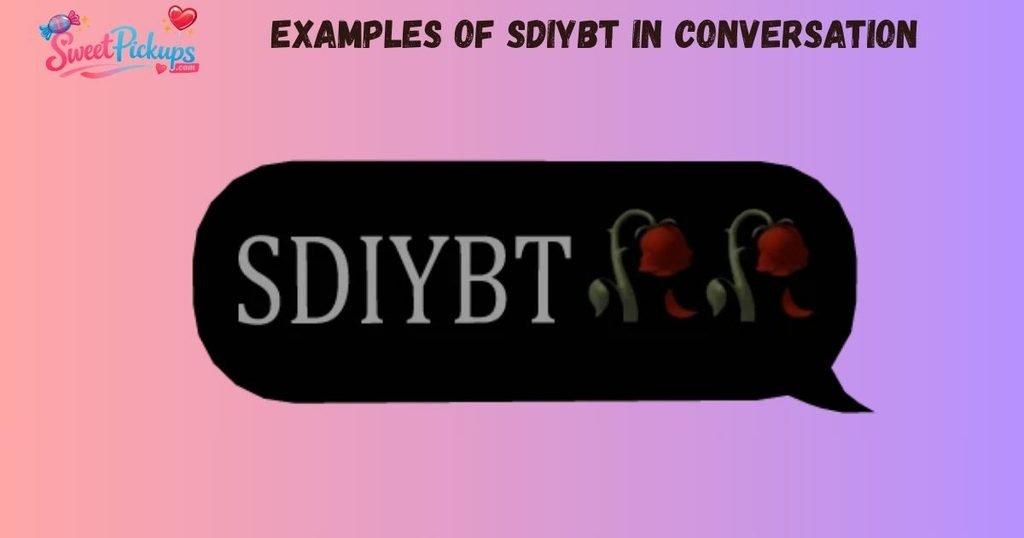
Example 1
A: you’re actually pretty funny
B: haha thanks, SDIYBT
Example 2
A: wanna play another game?
B: sure, SDIYBT, but you seeYou’reYou’re.
Example 3
A: Thanks for hanging out with me today.
B: no problem, SDIYBT
Example 4
A: we’ve Surer met in real life.
B: true lol, SDIYBT.
ExThanksThanks5
A: you trust me already?
B: not fully SDIYBT.
Example 6
We’ven i add you on insta?
B: yeaTrueTruere, SDIYBT though
When to Use and When Not to Use SDIYBT
SDIY,,BT, or “Save Do It Yourself But Trust,” is a concept that encourages individuals to balance self-reliance with seeking help when needed. Use SDIYBT when you possess the skills and knowledge required for a project but also recognize that collaboration or expert advice can enhance the outcome.
For instance, if you’re tackling a home improvement task, you might feel confident handling basic repairs but could benefit from consulting a professional for complex installations or safety considerations.
When To Use
- While chatting with someone you’ve recently met.
- During casual online conversations.
- In gaming communities.
- On Snapchat or Instagram DMs.
- When joking about not knowing someone well.
- In relaxed social media conversations.
When Not To Use
- Business emails.
- Professional workplace chats.
- School assignments.
- Customer support conversations.
- Serious discussions.
- Emergency or urgent situations.
Read Next: MBN Meaning
| Context | Example Phrase | Why It Works |
| Friend Chat | “SDIYBT ” | Casual and playful |
| Gaming Chat | “SDIYBT but let’s team up.” | Friendly conversation |
| Social Media DM | “SDIYBT lol.” | Natural online slang |
| Work Chat | “Nice to meet you.” | More professional |
| “I look forward to getting to know you.” | Formal and respectful |
How to Respond to SDIYBT
To respond to “SDIYBT” (which stands for “So Do I, You Better Talk”), it’s essential first to understand the context and emotional tone behind it. This phrase often implies that someone feels strongly about a particular topic or situation and is urging you to engage in a conversation. Start by acknowledging their feelings or concerns, showing that you respect their perspective.
Next, redirect the conversation in a way that fosters openness. ..You might say something like, “I appreciate your honesty, and I’d love to hear more about what you’re thinking.” This not only validates their emotions but also invites them to share their thoughts, which can lead to a more constructive dialogue.
Casual Response
Fair enough, I’ll do it.
Funny Response
Wow, such amazing customer service 😂
Professional Response
Understood. I’ll handle it myself.
Privacy-Conscious Response
No worries. I’ll find another solution.
Example Dialogue
Friend: SDIYBT.
You: Challenge accepted.
Similar Slang Words or Alternatives
| Slang | Meaning | When to Use |
| IDK | I Don’t Know | General conversations |
| TBH | To Be Honest | Giving an honest opinion |
| IMO | In My Opinion | Sharing personal views |
| HMU | Hit Me Up | Asking someone to contact you |
| WYD | What You Doing? | Starting a casual chat |
| NGL | Not Gonna Lie | Being honest in casual conversations |
Usage in Various Contexts
Texting
Text messaging is where SDIYBT appears most often.
Example
Alex: Can you finish my homework?
Jake: SDIYBT 😂
Social Media
On TikTok, Instagram, and Twitter, users often reply with SDIYBT when someone asks an obvious question.
Gaming
Gamers use SDIYBT when teammates ask for help with simple tasks.
Player 1: How do I equip this weapon?
Player 2: SDIYBT.
Casual Conversations
Friends may use it jokingly in everyday chats.
Friend: Can you order my food?
You: SDIYBT bro.
Meme Culture
The phrase is frequently associated with:
- SDIYBT meme
- SDIYBT #meme
- SDIYBT original
- SDIYBT Know Your Meme discussions
Read More: Glizzy Meaning
Conclusion
Understanding the SDIYBT meaning can significantly enhance your communication in the digital realm. Whether you’re responding to friends or navigating social media, being aware of this slang term adds depth to your interactions.
As you explore more examples, you’ll find yourself grasping the nuances of casual conversations. Remember, the key to effective communication is not just knowing the terms but also knowing how to apply them in the right context. So the next time you encounter “sdiybt,” you’ll be well-equipped to respond appropriately, making your digital exchanges smoother and more engaging.
FAQs
What does Sdiybt mean?
Sdiybt stands for “Shut up, do it yourself, bitch, thanks.” It’s often used sarcastically in conversations.
In what context is Sdiybt typically used?
It’s usually used in playful banter or when someone is frustrated with repeated questions and wants the other person to take initiative.
Can you give an example of how to use Sdiybt in a sentence?
“You keep asking me how to fix your car; Sdiybt if you’re so curious!”
How should I respond if someone uses Sdiybt on me?
You can respond with humor, like “Alright, I’ll tackle it myself! Thanks for the push!”
Is Sdiybt considered offensive?
It can be seen as rude depending on the context and relationship between the speakers, so use it carefully.