
Vicious Vs Viscous: What’s the Difference? Best Guide With Meaning, Examples & Uses
Confusing “vicious” and “viscous” could undermine your credibility in both writing and conversation. These two terms may sound similar, but they carry strikingly different meanings that can completely change your message.
In this article, “Vicious Vs Viscous: What’s the Difference?”, we’ll dissect each term, clarifying its definition and real-world usage. By the end, you’ll have a solid grasp on these words, empowering you to express yourself with precision and confidence.
What Does Vicious Mean?
The term “vicious” refers to actions or behaviors that are cruel, aggressive, and intentionally harmful. It often describes someone or something that exhibits a complete disregard for the well-being of others, whether it’s through violent acts, harsh words, or predatory behaviors.
This strong negative connotation highlights the severity and moral implications of such actions, making it clear that they stem from a place of malice or brutality.
“Vicious” can be applied in more complex contexts, such as a “vicious cycle,” where negative outcomes perpetuate and aggravate one another. This usage underscores how destructive patterns can escalate, creating a situation that feels inescapable and increasingly severe.
What Does Viscous Mean?
Viscous refers to the thickness or stickiness of a liquid, which affects how easily it flows. For example, honey and molasses have high viscosity, making them pour slowly and cling to surfaces. In contrast, water has low viscosity, allowing it to flow freely and quickly. Understanding viscosity helps in various fields, from cooking to engineering, as it can influence processes like mixing or lubrication.
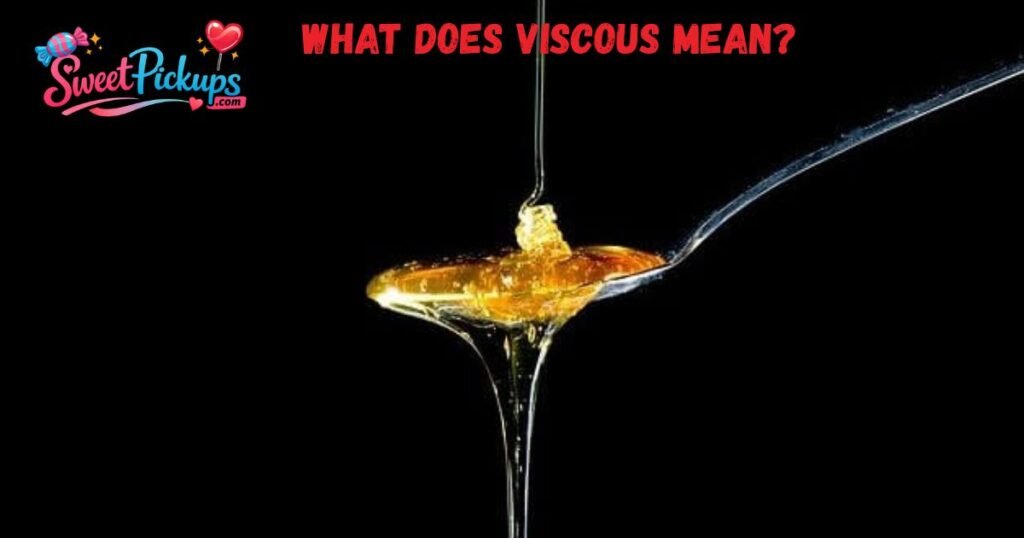
In scientific terms, viscosity is a measure of a fluid’s resistance to deformation or flow. This property is important in applications such as designing pipelines, where the viscosity of the transported fluid must be considered.
Vicious Vs Viscous: Grammar Guide
How each term is used in sentences
- Vicious is used as an adjective before nouns:
Example: The vicious storm caused damage. - Viscous is also an adjective, often used in scientific or descriptive contexts:
Example: The liquid is too viscous to pour easily.
Common mistakes learners make
- Using vicious instead of viscous when describing liquids.
- Confusing pronunciation and spelling due to similarity.
- Assuming both words are interchangeable (they are not).
Simple rules to remember
- Vicious = Violence (both start with “vi”)
- Viscous = Sticky Substance
Quick tips for writing and speaking
- Think about the context: behavior vs. texture.
- If you can replace the word with “cruel,” use vicious.
- If you can replace it with “thick,” use viscous.
Why Do People Confuse Vicious and Viscous?
People often confuse “vicious” and “viscous” because they are phonetically similar and differ by just one letter, leading to a common mix-up, especially among non-native English speakers.
“Vicious” refers to something cruel, violent, or immoral, evoking strong negative connotations. On the other hand, “viscous” describes the thickness or resistance to flow of a liquid, such as honey or molasses.
Can Vicious and Viscous Ever Be Interchangeable?
Vicious and viscous indeed belong to different semantic fields and are not interchangeable. The term “vicious” typically conveys a sense of malevolence or cruelty, often describing actions, behaviors, or even personalities that are harmful or morally reprehensible.
For instance, a “vicious cycle” implies a repeating pattern of behavior that perpetuates harm, whether physically or psychologically.
On the other hand, “viscous” refers to the physical properties of a substance, particularly its resistance to flow. It describes liquids that are thick and sticky, like honey or molasses.
While both words may sound similar, their meanings and connotations are distinct, making them unsuitable for interchangeable use in any context. Understanding these differences is crucial for effective communication.
Read Also: Pre and Post Meaning
Real-World Practical Examples: Vicious Vs Viscous
Vicious Examples
- The dog became vicious when threatened.
- She spread a vicious rumor at school.
- The company faced a vicious backlash online.
- He was caught in a vicious cycle of debt.
- The debate turned into a vicious argument.
Viscous Examples
- Honey is more viscous than water.
- The oil became viscous in cold weather.
- This chemical mixture is highly viscous.
- The sauce is too viscous to pour quickly.
- Lava is extremely viscous as it cools.
Which Spelling Should You Use?
The choice is not about location. It is about meaning.
Use Vicious When Talking About:
- Aggression
- Cruelty
- Violence
- Harmful behavior
Examples:
- A vicious dog
- A vicious argument
- A vicious attack
- A vicious rumor
Use Viscous When Talking About:
- Thick liquids
- Chemistry
- Engineering
- Cooking
- Physics
Examples:
- Viscous oil
- Viscous syrup
- Viscous lava
- Viscous paint
Synonyms and Alternatives of Vicious
- Cruel
- Brutal
- Savage
- Ferocious
- Malicious
- Violent
- Ruthless
- Hostile
- Aggressive
- Mean-spirited
- Nasty
- Merciless
- Barbaric
- Fierce
- Spiteful
Synonyms and Alternatives of Viscous
- Thick
- Sticky
- Syrupy
- Gummy
- Gluey
- Dense
- Slimy
- Gel-like
- Oily
- Molten
- Semi-fluid
- Heavy
- Sludgy
- Goopy
- Treacly
Understanding the Basics of Vicious vs Viscous
| Form | Type | Meaning | Example | Correct/Incorrect |
| Vicious | Adjective | Cruel, aggressive, harmful | A vicious attack | Correct |
| Viscous | Adjective | Thick and sticky; slow-flowing | Viscous oil | Correct |
| Vicious for thick liquids | Adjective | Incorrect usage | Vicious honey | Incorrect |
| Viscous for violent behavior | Adjective | Incorrect usage | Viscous criminal | Incorrect |
When to Use Each One
Use vicious when describing:
- Aggressive behavior
- Harmful actions
- Negative cycles (e.g., vicious cycle)
Use viscous when describing:
- Thick liquids
- Scientific properties
- Substances that resist flow
Read More: LMY Meaning in a Text
When NOT to Use Each One
Avoid using vicious when describing:
- Liquids or textures
Incorrect: The sauce is vicious
Avoid using viscous when describing:
- People or actions
Incorrect: He gave a viscous reply
Conclusion
Understanding the difference between “Vicious Vs Viscous” is crucial for effective communication. While “vicious” refers to something cruel, malicious, or severe, “viscous” describes a thick, sticky substance that flows slowly. Misusing these terms can lead to confusion and misunderstandings in both written and spoken contexts.
By integrating the provided examples and definitions into your vocabulary, you’ll enhance your language skills and ensure clarity in your expression. So, the next time you’re writing or speaking, remember to choose your words wisely.
FAQs
What is the main difference between “vicious” and “viscous”?
“Vicious” refers to something cruel or immoral, while “viscous” describes the thick, sticky consistency of a liquid.
Can you provide examples of how to use “vicious” in a sentence?
Sure! “The dog had a vicious bite,” or “He displayed vicious behavior during the argument.”
How is “viscous” used in everyday language?
An example would be, “The syrup was too viscous to pour easily,” indicating its thick nature.
Are “vicious” and “viscous” commonly confused?
Yes, they are often confused due to their similar pronunciation, but they have very different meanings.